KS2 Shared Writing for Poetry ✏️ | How to Model Poems Live (FREE Slides + Model Poem)

👉 Want your pupils to write confident poems straight away?
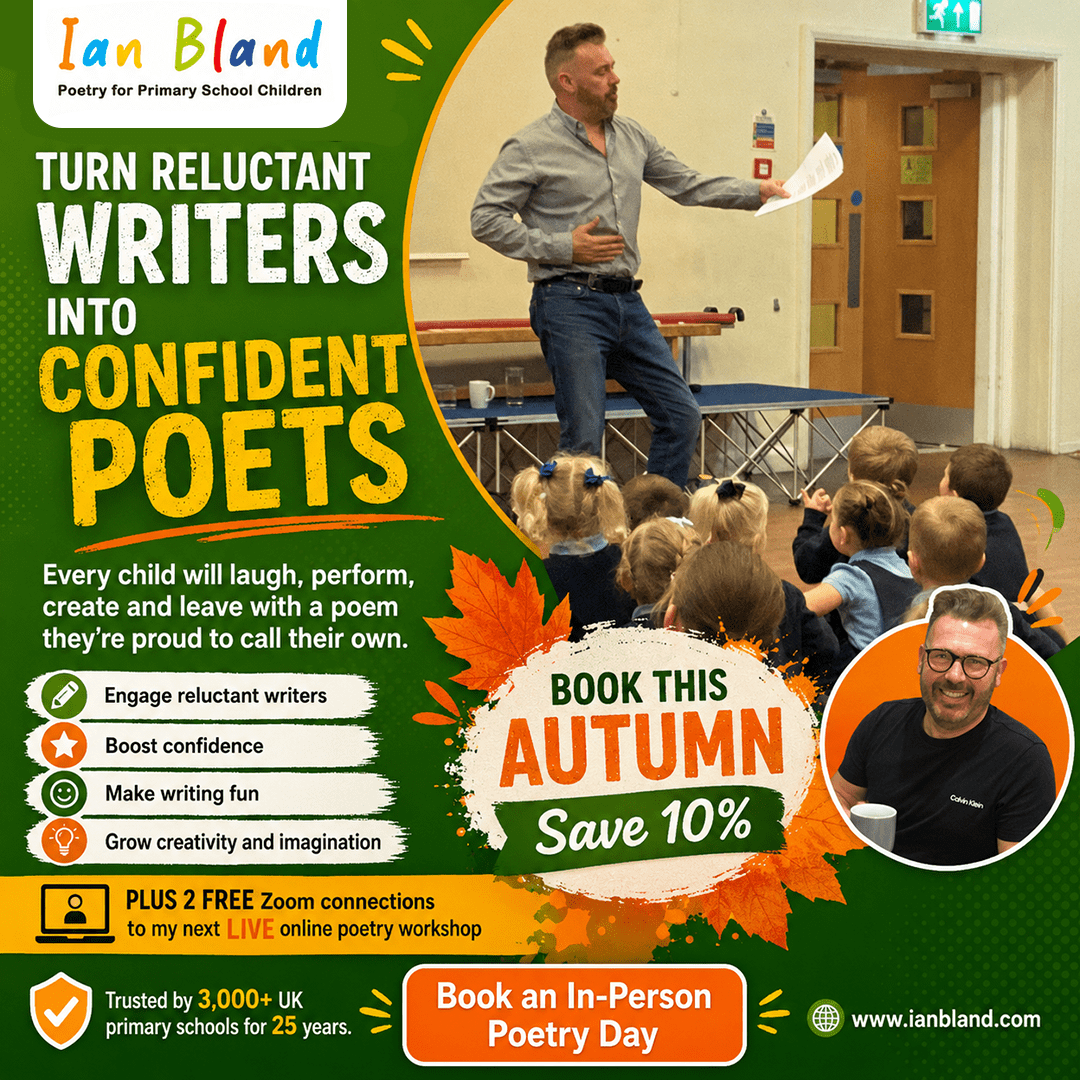
👉 Want to see this shared writing process modelled live in your school?
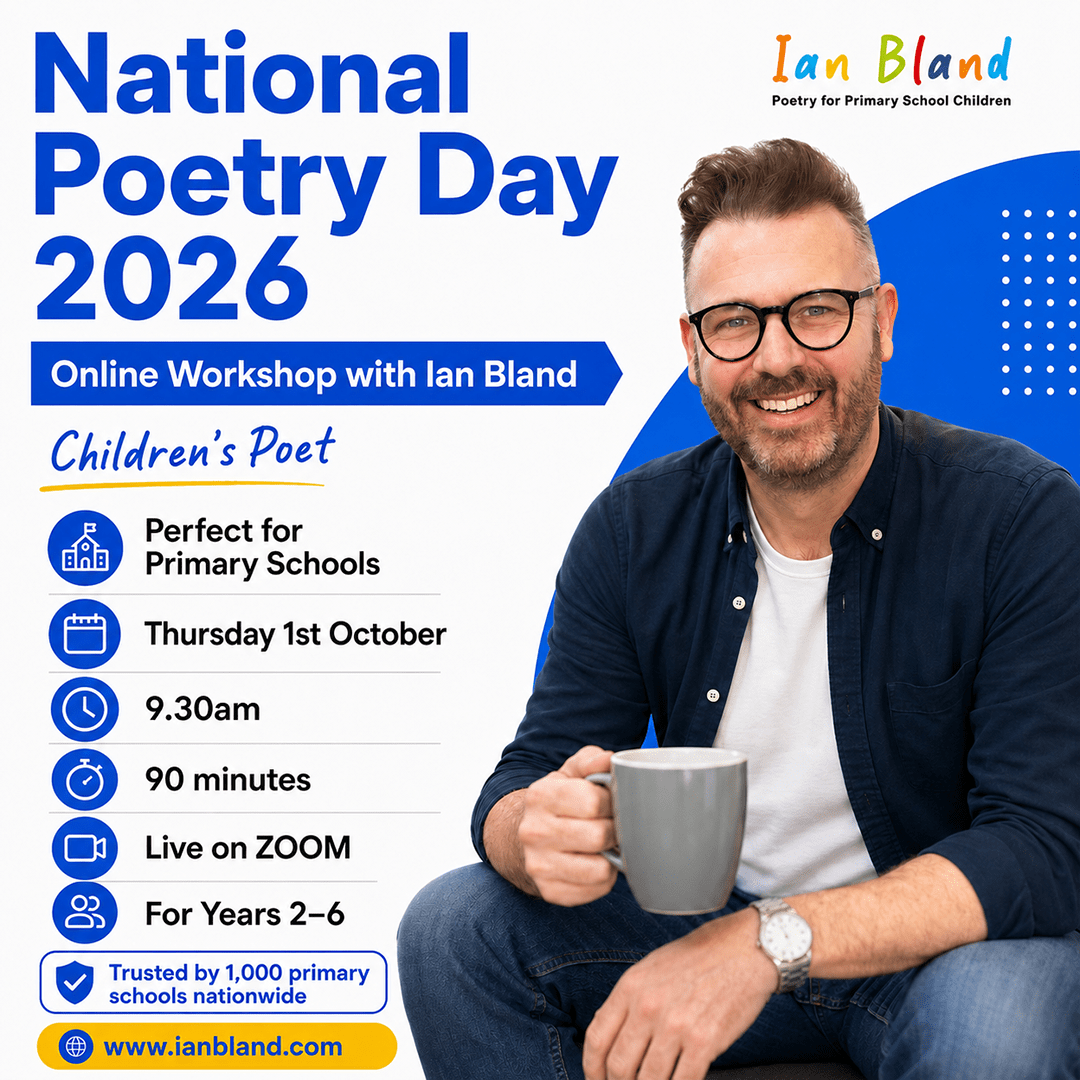
You can book me for a Poetry Day or Online Poetry Workshop, where I use this exact shared writing method with pupils in Years 3–6:
➡ Book here: Poets in Schools – Ian Bland
Shared writing is one of the most effective ways to teach poetry in KS2. When children see the teacher write a poem live, hear ideas being discussed, and watch lines being improved in real time, poetry suddenly feels doable, clear and exciting.
This post gives you:
✅ A model poem (WAGOLL) to use with your class
✅ A simple explanation of shared writing in poetry
✅ A FREE child-facing Shared Writing Slides PDF
✅ A step-by-step KS2 poetry lesson sequence
✅ Ideas for performance, editing and differentiation
✅ Clear UK curriculum links
Perfect for Year 3, Year 4, Year 5 and Year 6.

📘 What Is Shared Writing in KS2?
Shared writing is when:
-
The teacher writes in front of the class
-
Pupils suggest ideas and phrases
-
The class edits and improves together
-
The finished poem is read and performed aloud
It’s more than just “copying from the board”.
Shared writing shows the thinking process behind good writing:
-
choosing vocabulary
-
changing weak words
-
building rhythm
-
adding imagery
-
editing a line until it works
Poetry is ideal for shared writing because:
-
poems are short
-
lines are easy to tweak
-
vocabulary choices are visible
-
they lend themselves to performance
🔗 Useful background posts:
-
The Ultimate Guide to Teaching Poetry KS2 🔗Primary Poetry Progression Map
-
KS2 Poetry Vocabulary Mats | Word Banks for Better Poems 🔗 KS2 Poetry Lesson Plans (Ready To Use) 🔗 Ready-Made KS2 Poetry Model Texts 🔗 KS2 Poetry Sentence Stems and Scaffolds
🔗 Related: KS2 Poetry Cold Writes and Baseline Assessment 🔗 Poetry and the National Year of Reading

Great for teachers looking to save time!
🧠 Why Shared Writing Works So Well for Poetry
Shared writing fits perfectly with UK literacy pedagogy:
-
Explicit instruction – you show pupils how poems are written
-
Worked examples – they see a poem being built line by line
-
Cognitive load – they don’t have to juggle everything at once
-
Gradual release – I do → We do → You do
It is particularly powerful for:
-
reluctant writers
-
EAL learners
-
pupils with SEND
-
lower-confidence readers and performers
-
greater-depth writers who need to refine their craft
🔗 Useful related posts:
📥 FREE DOWNLOAD: KS2 Shared Writing Slides (Child-Facing)
To make this as easy as possible, I’ve created child-facing slides you can put straight on your whiteboard.
The slides:
-
guide the class through shared writing step by step
-
prompt pupils to upgrade words
-
build in reading aloud and performance
-
end with pupils writing their own poem independently
👉 Download the FREE KS2 Shared Writing Slides
Once they’re on the screen, you can begin shared writing immediately.

Hundreds of FREE poetry ideas, activities and resources-ready to download!
📝 Model Poem (WAGOLL): The Playground at Breaktime
Here’s a short model poem you can use to kick things off.
The Playground at Breaktime
by Ian Bland
The playground roars like a restless sea,
With swirling shouts and flying feet.
The skipping ropes hiss through silver air,
While trainers drum on the concrete beat.
The climbing frame rattles with fearless dreams,
The football thuds like thunder sound,
Then suddenly — the whistle screams…
And silence crashes to the ground.
💬 Class Discussion Ideas
Before you begin shared writing, read the poem aloud once or twice.
Ask:
-
Which verbs feel strongest?
-
What sounds can you hear in your head?
-
Which line paints the clearest picture?
-
Where does the mood change, and why?
You can then link into:
🔗 Performance Poetry in Primary Schools
🔗 Teaching Powerful Verbs Through Poetry
🔗 Teaching Figurative Language Through Poetry KS2 🔗 KS2 Poetry Planning Templates
🔗 KS2 Poetry Editing & Improving 🔗 KS2 Poetry Assessment Made Simple
🧩 Step-by-Step: How to Run a Shared Writing Poetry Lesson
This structure works well in a 40–60 minute lesson and ties in closely with the free slides.
✅ Step 1: Choose a Shared Theme (5 mins)
Let the class help you decide. Good options:
-
playground
-
storm
-
forest
-
classroom
-
winter
-
friendship
Keep it familiar so pupils can picture it clearly.
You can also tie this to:
✅ Step 2: Build a Quick Vocabulary Bank (5 mins)
On the board, create 3–4 headings:
-
Sounds (crash, whisper, thud, squeal…)
-
Movement (dash, spin, tumble, leap…)
-
Feelings (excitement, nerves, pride, fear…)
-
Objects (rope, gate, whistle, clouds, trees…)
Pupils call out ideas; you jot them down.
This warms up their language and connects with:
🔗 KS2 Poetry Vocabulary Mats | Word Banks for Better Poems
🔗 KS2 Adjective & Adverb Word Banks for Poetry
✅ Step 3: Write the First Line Together (10 mins)
Now model the opening line out loud and show your thinking.
For example, for a playground poem you might say:
“I want a powerful verb to start. ‘The playground…’ what does it do?”
Pupils suggest ideas. You might arrive at:
“The playground explodes into colour and sound,”
Then ask:
-
Is “explodes” too strong?
-
Would “bursts” or “erupts” work better?
-
Which word fits the mood we want?
This one moment teaches more about poetry than a whole worksheet.
✅ Step 4: Build 4–6 Lines Using Shared Writing (10–15 mins)
Repeat the pattern:
-
Draft a line together
-
Read it out loud
-
Improve one or two words
-
Check the rhythm
Encourage pupils to:
-
spot weak verbs
-
suggest more precise adjectives
-
add sound or movement
-
try a simile or a little personification
Links well with:
🔗 Christmas Similes and Metaphors KS2
🔗 Teaching Figurative Language Through Poetry KS2
Stop before the poem is fully finished.
Tell the class:
“Tomorrow, you’ll finish the poem yourselves…”
This builds real anticipation.
✅ Step 5: Independent Writing (15–20 mins)
Now pupils write their own poem, using the shared version as a scaffold.
They can:
-
stick with the same theme
-
change the setting (e.g. “The Library at Lunchtime”)
-
copy the structure but use their own ideas
Remind them they can:
-
borrow from the class word bank
-
reuse any structures they like
-
edit as they go
You might link this to:
🔗 7 Creative Poetry Starters for KS2
🔗 Teach Narrative Poetry KS2
✅ Step 6: Performance and Reflection (10–15 mins)
To finish:
-
Pupils read to a partner or small group
-
A few brave volunteers perform to the whole class
-
The class reflects on which words and lines really worked
You can connect this to:
🔗 5 Exciting Poems To Learn and Perform KS2
🔗 Best Poems for Children to Perform KS2
🔗 Poems for KS2 Assemblies
Simple reflection questions:
-
What word are you most proud of?
-
Which line changed the most from your first idea?
-
How did reading it aloud help you improve it?
🎭 Differentiation Ideas
Support:
-
Provide a partially written opening line
-
Highlight 10–12 “go-to” vocabulary choices
-
Allow paired writing
-
Use sentence stems on the board
Challenge:
-
Ask for at least one metaphor
-
Encourage a shift in mood or pace
-
Use stanza structure (e.g. 3 x quatrains)
-
Invite pupils to write a contrast poem (e.g. “The Playground at Midnight”)
These ideas sit nicely alongside:
🔗 Descriptive Writing KS2
🔗 Creative Writing KS2
📊 Assessment Opportunities
Shared writing gives you easy, live assessment of:
-
vocabulary choice
-
use of figurative language
-
ability to suggest improvements
-
confidence in reading aloud
-
understanding of structure and rhythm
You can collect the class poem for display, or ask pupils to publish their independent poems as part of a mini class anthology.
🔗 KS2 Poetry Comprehension Worksheets can also help you assess understanding of poetic features.

📚 Curriculum Links (UK KS2)
This work supports:
-
Writing – composition, planning, drafting, evaluating and editing
-
Vocabulary, grammar and punctuation – precise word choice
-
Spoken language – discussion, explanation, performance
-
Reading – listening to and discussing a wide range of poetry
It fits neatly within units on:
-
imagery
-
figurative language
-
performance poetry
-
descriptive writing
🌟 Final Thoughts
Shared writing takes the fear out of poetry.
Instead of being left to “just write a poem”, children:
-
see you model real writing
-
understand how a poem is built
-
join in with shaping and improving lines
-
gain confidence to try their own ideas
-
experience the fun of performing aloud
They start to think:
“I can do this. I know what poets do.”

📣 Bring Shared Poetry Writing to Life in Your School
If you’d like your pupils to experience live shared poetry writing with a professional children’s poet, this is exactly what happens in my:
✅ Poetry Days in Primary Schools
✅ Online Poetry Workshops for KS2
➡ Find out more and book your school here: Poets in Schools – Ian Bland