KS2 Poetry Planning Templates 📝 | Free Writing Frames for Primary English
Teaching poetry in KS2 can be joyful — but planning it can also feel overwhelming.
How do you structure a poetry lesson?
How do you help pupils organise ideas?
How do you turn vocabulary into a finished poem?
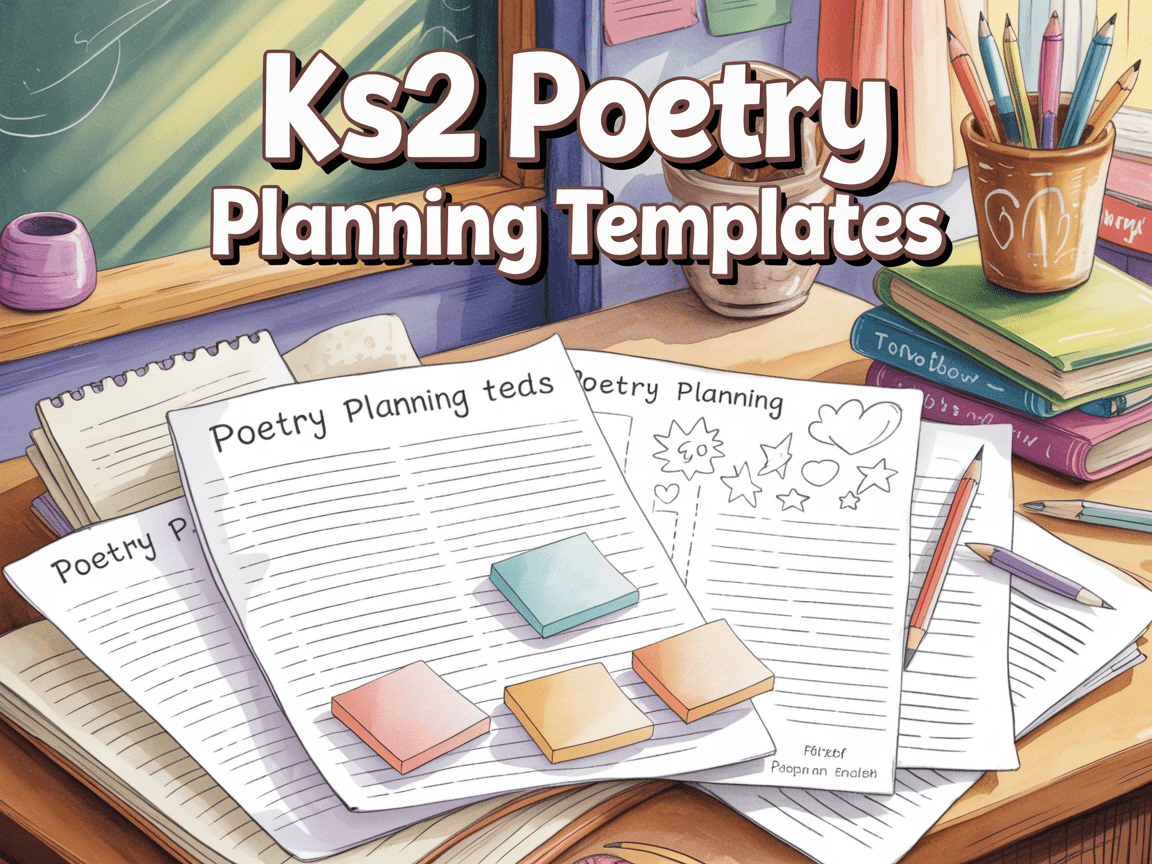
These KS2 Poetry Planning Templates give you ready-made structures, vocabulary prompts and writing frames you can use instantly in any classroom. Perfect for busy teachers who want clarity, confidence and strong pupil outcomes.
This post includes:
✅ Four downloadable writing frames (PDF)
• Poetry Planning Sheet (simple)
• 4-Line Stanza Template
• Imagery Builder (5 Senses Map)
• Editing & Performance Checklist
✅ A model WAGOLL quatrain with explanation
✅ Clear lesson sequence for KS2 poetry writing
Perfect for Year 3, Year 4, Year 5 and Year 6.

If you’d like your pupils to experience live shared writing, performance confidence and imaginative wordplay, you can also book an Online Poetry Workshop or Poetry Day in school.
⭐ Why Use Planning Frames for KS2 Poetry?
Planning templates help children:
-
gather vocabulary
-
structure their ideas
-
write with purpose
-
edit more effectively
-
prepare for performance
They make poetry feel manageable, fun, and success-driven.
They are especially powerful for:
-
reluctant writers
-
pupils with SEND
-
EAL learners
-
children who struggle with sequencing
-
non-specialist teachers who want structure

Great for teachers looking to save time!
📥 FREE Download 1: Poetry Planning Sheet (Simple Version)
This accessible planning sheet breaks a poem into four steps:
-
Topic / Theme
-
Vocabulary Bank
-
Line Ideas
-
Final Poem
Works perfectly alongside:
🔗 KS2 Poetry Vocabulary Mats
🔗 Adjective & Adverb Word Mats
🔗 Teaching Powerful Verbs Through Poetry
🔗 KS2 Poetry Editing & Improving
🔗 KS2 Poetry Assessment Made Simple
🔗 KS2 Poetry Lesson Plans (Ready To Use) 🔗 Ready-Made KS2 Poetry Model Texts
🔗 Related: KS2 Poetry Cold Writes and Baseline Assessment 🔗 Poetry and the National Year of Reading
🔗 Related: Creative Book Spine Poetry Ideas 🔗Primary Poetry Progression Map

Hundreds of FREE poetry ideas, activities and resources-ready to download!
🎨 Building Vocabulary Before Writing
Before drafting anything, encourage pupils to collect vocabulary using simple headings:
-
Sounds
-
Movement
-
Images
-
Feelings
-
Objects / Setting
Example for a river poem:
-
Sounds: trickle, crash, murmur, splash
-
Movement: swirling, sliding, tumbling
-
Feelings: calm, restless, excited
-
Objects: pebbles, reeds, shadows
This anchors their imagination and gives every child something to work with.

📥 FREE Download 2: 4-Line Stanza Planning Template (Quatrains)
Most KS2 poems work beautifully in four-line stanzas (quatrains).
This template breaks each stanza into:
-
Mood
-
Vocabulary
-
Technique
-
Draft Line
👉 Download the 4-Line Stanza Template (PDF)
✨ WAGOLL Example: A Successful Quatrain (and How It Was Written)
Here is a model 4-line stanza written using the planning process above:
WAGOLL Quatrain: “The River at Dawn”
The river whispers softly through the trees,
Its silver morning breath begins to rise.
Light dances on the ripples with the breeze,
As daybreak paints its colours on the skies.
🧠 How This Quatrain Was Written (Teacher Explanation)
1. Choosing the Mood
I wanted the stanza to feel calm, gentle and glowing, so I avoided harsh verbs or noisy imagery.
Keywords I aimed for:
-
soft
-
silver
-
light
-
quiet movement
-
dawn colours
This helps pupils see why vocabulary must match mood.
2. Selecting Strong Verbs and Sound
I chose whispers for line 1 because:
-
it matches the quiet dawn mood
-
it is both a sound and a movement
-
it creates immediate atmosphere
“Light dances” in line 3 creates:
-
gentle motion
-
contrast with the quiet river
-
personification pupils can imitate
3. Using Imagery
Each line includes a clear image:
-
whispers softly through the trees → sound + setting
-
silver morning breath → metaphor
-
light dances on the ripples → personification + movement
-
daybreak paints its colours → visual metaphor
This shows pupils how imagery layers into poetry.
4. Rhythm and Flow
The stanza reads aloud smoothly:
-
gentle, even beats
-
no heavy clusters of consonants
-
long vowel sounds (whispers, silver, breeze, skies)
Teachers can demonstrate how reading aloud reveals rhythm.
5. Rhyme Pattern (optional)
I used an ABAB rhyme scheme:
-
trees (A)
-
rise (B)
-
breeze (A)
-
skies (B)
This pattern is simple and reliable for KS2.
6. Editing Choices
Original first draft included:
“The river murmurs softly past the trees”
I changed murmurs → whispers because:
-
whispers is lighter
-
fits dawn atmosphere better
-
creates a clearer sensory image
This demonstrates the editing process.
This WAGOLL + explanation can be used exactly as-is in KS2 classrooms.
🧠 How to Use These Templates in a Poetry Lesson (40–60 mins)
Step 1: Quick Warm-Up (5 mins)
Try:
-
read a short model poem
-
brainstorm vocabulary
-
spot a simile or sound device
Step 2: Build Shared Vocabulary (5–10 mins)
Choose a theme e.g. a river, a forest, a playground. Write 3–4 headings on the board:
-
Sounds
-
Movement
-
Images
-
Feelings
Pupils contribute ideas.
Step 3: Model One Line Together (5–7 mins)
Think aloud:
“I want a verb that fits the mood…”
“Does this line sound better when I read it aloud?”
Link to:
🔗 KS2 Shared Writing for Poetry
Step 4: Pupils Plan Using the Templates (10 mins)
They complete their vocabulary boxes and draft a line or two.
Step 5: Independent Drafting (10–15 mins)
Pupils use the plan to create a stanza or full poem.
Step 6: Editing & Improving (5–10 mins)
Use the checklist (below).
Read aloud — it reveals rhythm instantly.
Step 7: Performance (5–10 mins)
Small group or whole-class performances.
Link to:
🔗 Performance Poetry in Primary Schools
📥 FREE Download 3: Imagery Builder (5 Senses Map)
A visual template to gather:
👁️ Sight
👂 Sound
👃 Smell
✋ Touch
👅 Taste (optional)
👉 Download the 5 Senses Imagery Builder (PDF)
Perfect for:
-
Winter poems
-
Nature poems
-
Setting descriptions

📥 FREE Download 4: Poetry Editing & Performance Checklist
Checklist includes:
✔ strong verbs?
✔ at least one image or sound?
✔ clear rhythm when read aloud?
✔ unnecessary words removed?
✔ confident performance voice?
🎭 Differentiation Ideas
Support:
-
highlight vocabulary to choose from
-
sentence starters
-
partially completed frames
Challenge:
-
use contrast in two stanzas
-
include metaphor + sound device
-
shift viewpoint
Greater depth:
-
use enjambment deliberately
-
experiment with rhythm patterns
 🧑🏫 Teacher Pedagogy Notes
These templates support:
-
planning, drafting and editing
-
vocabulary building
-
figurative language
-
spoken language and performance
They work across units on:
-
descriptive poetry
-
narrative poetry
-
seasonal poems
-
cross-curricular writing (science, geography, history)
🌟 Final Thoughts
With clear planning frames, KS2 poetry becomes an accessible, exciting process.
Pupils learn to:
-
gather vocabulary
-
plan structure
-
write confidently
-
edit with purpose
-
perform with pride
And teachers gain simple, reliable tools for powerful poetry lessons.

If you’d like your pupils to experience live modelled writing, imaginative vocabulary play and performance confidence, you can book an Online Poetry Workshop or Poetry Day in your school.
👉 Find out more and book your school here: Poets in Schools – Ian Bland